Buy bmpa.eu ?
We are moving the project
bmpa.eu .
Are you interested in purchasing the domain
bmpa.eu ?
domain@kv-gmbh.de · 0541-91531010
Buy bmpa.eu ?
Are wages liabilities?
Yes, wages are considered liabilities for a company because they represent an obligation to pay employees for their work. From an accounting perspective, wages are typically recorded as a liability on the company's balance sheet until they are paid to the employees. This reflects the company's obligation to fulfill its financial commitments to its employees. Therefore, wages are classified as a liability until they are settled. **
What are liabilities and receivables?
Liabilities are obligations or debts that a company owes to external parties, such as loans, accounts payable, or accrued expenses. They represent the company's financial responsibilities that must be settled in the future. Receivables, on the other hand, are amounts owed to a company by its customers or other parties for goods or services provided. They represent the company's right to receive payment and are considered assets on the company's balance sheet. Both liabilities and receivables are important components of a company's financial position and are crucial for assessing its overall financial health. **


Similar search terms for Liabilities
Top-Angebote
Products related to Liabilities:
-
Superfresco Easy Industry Black WallpaperThe combination of deep charcoal and steel grey colors create a depth and atmosphere to this paper which will reflect in your home. Style with matt concrete textures and glossy metallic finishes to complete your scheme.80,00 $*Shipping: 0,00 $Secure redirect to the provider
-
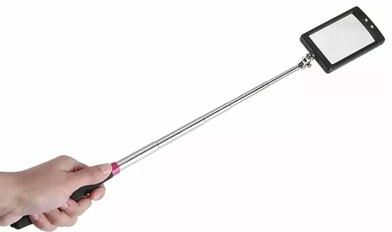
Multicon Wholesale Hub Telescoping Inspection Mirror Set Adjustable Flexible Inspection Mirror For Hard to Reach Spaces Telescoping Inspection Mirror Set Adjustable Flexible Inspection Mirror For Hard to Reach SpacesLooking for a versatile tool to help you inspect tight spaces The 2 Pack Telescoping Inspection Mirror Set is designed for those hardtoreach areas, making inspections easier than ever. Whether you're a mechanic, DIY enthusiast, or just need to check...69,97 $*Shipping: 0,00 $Secure redirect to the provider


-
Why is equity on the liabilities side?
Equity is placed on the liabilities side of the balance sheet because it represents the claims of the company's owners or shareholders on the company's assets. It is considered a liability because the company has an obligation to its owners to repay their investment in the business. However, unlike other liabilities, equity does not have a fixed repayment schedule and is considered a residual claim, meaning it is only paid out after all other liabilities have been settled. Therefore, equity is categorized as a liability on the balance sheet to accurately reflect the financial obligations of the company. **
-
What are transitory assets and/or liabilities?
Transitory assets and/or liabilities are items on a company's balance sheet that are expected to be settled or used up within a relatively short period of time, typically within one year. These items are considered to be temporary in nature and are not expected to have a long-term impact on the company's financial position. Examples of transitory assets include cash, accounts receivable, and inventory, while examples of transitory liabilities include accounts payable and short-term debt. It is important for investors and analysts to understand the nature of these transitory items when evaluating a company's financial health and performance. **
-
How are the assets and liabilities evaluated?
Assets and liabilities are evaluated based on their current market value or book value. For assets, this means determining their fair market value, which is the price that they could be sold for in the current market. Liabilities are evaluated based on their current outstanding balance or the amount that is owed. This evaluation helps to determine the financial health and position of a company, as well as its ability to meet its financial obligations. **
-
How can accounting, liabilities, and receivables be interconnected?
Accounting, liabilities, and receivables are interconnected in the sense that they all play a role in a company's financial health. Liabilities are debts or obligations that a company owes, which are recorded on the balance sheet as part of the accounting process. Receivables, on the other hand, represent money owed to the company by its customers or clients, and are also recorded on the balance sheet as assets. The relationship between these two is that receivables can eventually become liabilities if they are not collected in a timely manner, which can impact the company's financial position. Therefore, proper accounting practices are essential to accurately track and manage both liabilities and receivables to ensure the company's financial stability. **


What is a statement of assets and liabilities?
A statement of assets and liabilities is a financial document that provides a snapshot of an individual's or organization's financial position at a specific point in time. It lists all the assets, such as cash, investments, property, and equipment, as well as all the liabilities, such as loans, mortgages, and other debts. The statement helps to assess the overall financial health and solvency of the entity by comparing the total assets to the total liabilities. It is an essential tool for financial planning, decision-making, and assessing the ability to meet financial obligations. **
How can liabilities be settled in other ways?
Liabilities can be settled in other ways through various means such as debt restructuring, where the terms of the debt are renegotiated to make it more manageable for the debtor. Another way is through debt-for-equity swaps, where the creditor agrees to convert the debt into an ownership stake in the debtor's company. Additionally, liabilities can be settled through the sale of assets, where the debtor sells off assets to generate cash to pay off the liabilities. Finally, some liabilities can be settled through the issuance of new debt to replace the existing liabilities, known as refinancing. **
Top-Angebote
Products related to Liabilities:
-
Salon Care Microwavable Heat Processing CapSalon Care Microwavable Heat Processing Cap just needs to be heated in the microwave, no cord, no fuss! The filling is 100% flaxseed and will hold heat for up to 30 minutes. The cap is reusable time and time again. Use with any hair treatment that...21,99 $*Shipping: 0,00 $Secure redirect to the provider
-
Officially Licensed Gas Safe Gas Safe® Landlord Safety Record for Leisure Industry – Pad of 25Gas Safe® Landlord Safety Record for Leisure Industry – Pack of 25 (GSRLILPAD14) The Gas Safe® Landlords Gas Safety Record Pad for the leisure industry is designed for gas safety inspections on boats and Leisure Accommodation Vehicles (LAVs). It contains 25 sets of carbonless 3-part forms, giving gas engineers, landlords and service companies working in the mobile leisure industry a straightforward way to keep compliant records. Reinforced double covers, a writing guard and triple stitched binding make the pad tough enough for outdoor and mobile use, and the A4 landscape layout is easy to complete in tight or awkward spaces typical of boats and LAVs. Each form is individually numbered and perforated for clean removal and a professional finish. Key Features & Benefits Leisure Se13,50 £*Shipping: 5,00 £Secure redirect to the provider
-
Superfresco Easy Industry Black WallpaperThe combination of deep charcoal and steel grey colors create a depth and atmosphere to this paper which will reflect in your home. Style with matt concrete textures and glossy metallic finishes to complete your scheme.80,00 $*Shipping: 0,00 $Secure redirect to the provider
-
Multicon Wholesale Hub Telescoping Inspection Mirror Set Adjustable Flexible Inspection Mirror For Hard to Reach Spaces Telescoping Inspection Mirror Set Adjustable Flexible Inspection Mirror For Hard to Reach SpacesLooking for a versatile tool to help you inspect tight spaces The 2 Pack Telescoping Inspection Mirror Set is designed for those hardtoreach areas, making inspections easier than ever. Whether you're a mechanic, DIY enthusiast, or just need to check...69,97 $*Shipping: 0,00 $Secure redirect to the provider
-
Are wages liabilities?
Yes, wages are considered liabilities for a company because they represent an obligation to pay employees for their work. From an accounting perspective, wages are typically recorded as a liability on the company's balance sheet until they are paid to the employees. This reflects the company's obligation to fulfill its financial commitments to its employees. Therefore, wages are classified as a liability until they are settled. **
-
What are liabilities and receivables?
Liabilities are obligations or debts that a company owes to external parties, such as loans, accounts payable, or accrued expenses. They represent the company's financial responsibilities that must be settled in the future. Receivables, on the other hand, are amounts owed to a company by its customers or other parties for goods or services provided. They represent the company's right to receive payment and are considered assets on the company's balance sheet. Both liabilities and receivables are important components of a company's financial position and are crucial for assessing its overall financial health. **
-
Why is equity on the liabilities side?
Equity is placed on the liabilities side of the balance sheet because it represents the claims of the company's owners or shareholders on the company's assets. It is considered a liability because the company has an obligation to its owners to repay their investment in the business. However, unlike other liabilities, equity does not have a fixed repayment schedule and is considered a residual claim, meaning it is only paid out after all other liabilities have been settled. Therefore, equity is categorized as a liability on the balance sheet to accurately reflect the financial obligations of the company. **
-
What are transitory assets and/or liabilities?
Transitory assets and/or liabilities are items on a company's balance sheet that are expected to be settled or used up within a relatively short period of time, typically within one year. These items are considered to be temporary in nature and are not expected to have a long-term impact on the company's financial position. Examples of transitory assets include cash, accounts receivable, and inventory, while examples of transitory liabilities include accounts payable and short-term debt. It is important for investors and analysts to understand the nature of these transitory items when evaluating a company's financial health and performance. **
Similar search terms for Liabilities
-
Market Central Telescoping LED Inspection Mirror For Mechanics Telescoping LED Inspection Mirror For MechanicsExperience the confidence of seeing what others can't. This LED inspection mirror helps you inspect tight, dark, and hardtoreach spaces without taking parts apart, making every repair faster and easier. Designed for mechanics, DIY enthusiasts, and...34,97 $*Shipping: 0,00 $Secure redirect to the provider
-
Uplifted Finds Diagnostic 365nm UV Clinical Inspection Hub Diagnostic 365nm UV Clinical Inspection HubEnsure the dermatological integrity of your pet with the Clinical Inspection Hub, a professionalgrade diagnostic module engineered with 365nm UVspectrum logic. This highperformance device features a specialized Black Mirror filter technology...90,97 $*Shipping: 0,00 $Secure redirect to the provider
-
How are the assets and liabilities evaluated?
Assets and liabilities are evaluated based on their current market value or book value. For assets, this means determining their fair market value, which is the price that they could be sold for in the current market. Liabilities are evaluated based on their current outstanding balance or the amount that is owed. This evaluation helps to determine the financial health and position of a company, as well as its ability to meet its financial obligations. **
-
How can accounting, liabilities, and receivables be interconnected?
Accounting, liabilities, and receivables are interconnected in the sense that they all play a role in a company's financial health. Liabilities are debts or obligations that a company owes, which are recorded on the balance sheet as part of the accounting process. Receivables, on the other hand, represent money owed to the company by its customers or clients, and are also recorded on the balance sheet as assets. The relationship between these two is that receivables can eventually become liabilities if they are not collected in a timely manner, which can impact the company's financial position. Therefore, proper accounting practices are essential to accurately track and manage both liabilities and receivables to ensure the company's financial stability. **
-
What is a statement of assets and liabilities?
A statement of assets and liabilities is a financial document that provides a snapshot of an individual's or organization's financial position at a specific point in time. It lists all the assets, such as cash, investments, property, and equipment, as well as all the liabilities, such as loans, mortgages, and other debts. The statement helps to assess the overall financial health and solvency of the entity by comparing the total assets to the total liabilities. It is an essential tool for financial planning, decision-making, and assessing the ability to meet financial obligations. **
-
How can liabilities be settled in other ways?
Liabilities can be settled in other ways through various means such as debt restructuring, where the terms of the debt are renegotiated to make it more manageable for the debtor. Another way is through debt-for-equity swaps, where the creditor agrees to convert the debt into an ownership stake in the debtor's company. Additionally, liabilities can be settled through the sale of assets, where the debtor sells off assets to generate cash to pay off the liabilities. Finally, some liabilities can be settled through the issuance of new debt to replace the existing liabilities, known as refinancing. **
* All prices are inclusive of VAT and, if applicable, plus shipping costs. The offer information is based on the details provided by the respective shop and is updated through automated processes. Real-time updates do not occur, so deviations can occur in individual cases. ** Note: Parts of this content were created by AI.