Buy bmpa.eu ?
We are moving the project
bmpa.eu .
Are you interested in purchasing the domain
bmpa.eu ?
domain@kv-gmbh.de · 0541-91531010
Buy bmpa.eu ?
Why do liquids have different densities at the same temperature?
Liquids have different densities at the same temperature because of variations in their molecular composition and arrangement. The density of a liquid is determined by the mass of its molecules and how closely packed they are. Different liquids have different molecular weights and sizes, leading to variations in density. Additionally, factors such as intermolecular forces and polarity can also influence the density of a liquid. **
How do you calculate the center of mass with different densities?
To calculate the center of mass with different densities, you would first need to determine the mass of each individual component. Then, you would multiply the mass of each component by its respective position vector, and sum these products for all components. Finally, you would divide the total sum by the total mass of the system to find the coordinates of the center of mass. This calculation takes into account the different densities of the components, as the mass and position of each component are considered in the overall calculation. **

Similar search terms for Densities
Top-Angebote
Products related to Densities:
-
Officially Licensed Gas Safe Gas Safe® Landlord Safety Record for Leisure Industry – Pad of 25Gas Safe® Landlord Safety Record for Leisure Industry – Pack of 25 (GSRLILPAD14) The Gas Safe® Landlords Gas Safety Record Pad for the leisure industry is designed for gas safety inspections on boats and Leisure Accommodation Vehicles (LAVs). It contains 25 sets of carbonless 3-part forms, giving gas engineers, landlords and service companies working in the mobile leisure industry a straightforward way to keep compliant records. Reinforced double covers, a writing guard and triple stitched binding make the pad tough enough for outdoor and mobile use, and the A4 landscape layout is easy to complete in tight or awkward spaces typical of boats and LAVs. Each form is individually numbered and perforated for clean removal and a professional finish. Key Features & Benefits Leisure Se13,50 £*Shipping: 5,00 £Secure redirect to the provider
-
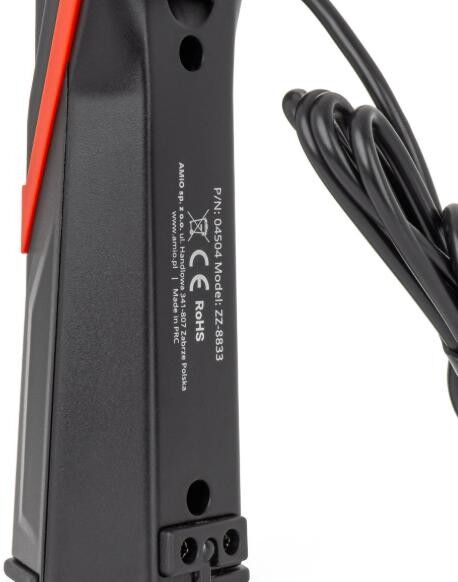
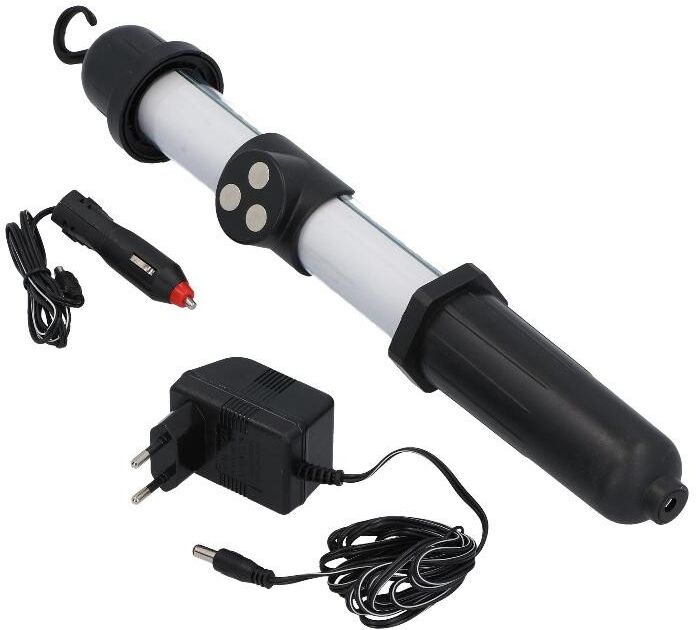
AMiO 04504 Inspection LampBattery: Li-Ion Rechargeable Battery; Features: with rechargeable battery, with charger, magnetic, with hook; Lamp Type: LED; Rechargeable Battery Voltage [V]: 3.7; Light Duration [h]: 2-12; Charging time [h]: 3.5-4; Luminous Flux [lm]: 600, 300, 100; Operating Mode: Battery; Battery Capacity [mAh]: 2600; Mounting Type: Magnet Mount; Cable Length [m]: 0.6; Shock Resistance (IK code): IK07 (up to 2.0J); Connectors/Plugs: USB type-C; Rotation angle [°]: 360; Material: ABS (Acrylonitrile-Butadiene-Styrene Copolymerisate); Protection Type (IP Code): IP2022,49 £*Shipping: 8,45 £Secure redirect to the provider
-
AMiO 04505 Inspection LampBattery: Li-Ion Rechargeable Battery; Light Duration [h]: 2-2.5 hours (1000 lm), 4 hours (500 lm); Features: with rechargeable battery, with charger, magnetic; Charging time [h]: 3.5-4, 2; Lamp Type: LED; Rechargeable Battery Voltage [V]: 3.7; Luminous Flux [lm]: 500, 1000; Operating Mode: Battery; Battery Capacity [mAh]: 4400; Mounting Type: Magnet Mount; Cable Length [m]: 0.6; Shock Resistance (IK code): IK07 (up to 2.0J); Supplementary Info: Motion sensor; Connectors/Plugs: USB type-C; Overcharging protection: Yes; Rotation angle [°]: 18035,99 £*Shipping: 8,45 £Secure redirect to the provider
-
ENERGY NE00356 Inspection LampLamp Type: LED; Candlepower [cd]: 13; Voltage [V]: 7.2; Battery Capacity [mAh]: 700; Moisture protection: with splash-water protection; Rechargeable Battery Type: Li-Ion Rechargeable Battery; Number of LEDs: 60+1; Light Duration [h]: 4; Mains voltage (AC) [V]: 230; DC Voltage [V]: 12; Fastening Type: Hook fixing; Supplementary Article / Supplementary Info Info 2: Magnetic14,49 £*Shipping: 8,45 £Secure redirect to the provider


-
Can different types of milk be distinguished based on their different densities?
Yes, different types of milk can be distinguished based on their different densities. Whole milk, which contains a higher fat content, is denser than skim milk, which has had most of the fat removed. By measuring the density of a sample of milk, one can determine the type of milk based on its fat content. This can be done using a hydrometer or a simple float test. **
-
What is the explanation for the different densities of diamond and graphite?
The different densities of diamond and graphite can be explained by their different atomic structures. Diamond has a tightly packed, three-dimensional crystal lattice structure, with each carbon atom bonded to four other carbon atoms in a tetrahedral arrangement. This structure results in a high density for diamond. On the other hand, graphite has a layered structure with carbon atoms arranged in flat, hexagonal sheets that are only weakly bonded to each other. This arrangement allows for more space between the layers, resulting in a lower density for graphite compared to diamond. **
-
Can different types of milk be distinguished based on their varying densities?
Yes, different types of milk can be distinguished based on their varying densities. The density of milk can be influenced by factors such as fat content and protein content. For example, whole milk is denser than skim milk due to its higher fat content. By measuring the density of milk samples, it is possible to differentiate between different types of milk. **
-
Can one distinguish between different types of milk based on their different densities?
Yes, one can distinguish between different types of milk based on their different densities. Whole milk typically has a higher density compared to skim milk or low-fat milk due to its higher fat content. By measuring the density of milk using a hydrometer or a similar device, one can differentiate between different types of milk based on their fat content. This method can be useful for quality control purposes in the dairy industry or for individuals who are looking to monitor their fat intake. **


What is the mathematical approach to solving the iceberg problem with two different densities?
To solve the iceberg problem with two different densities mathematically, we can use the principle of buoyancy. We can calculate the buoyant force acting on each iceberg by multiplying the density of water, the acceleration due to gravity, and the volume of the submerged portion of the iceberg. By comparing the buoyant forces acting on the two icebergs, we can determine which iceberg will float higher or lower in the water. This approach allows us to quantitatively analyze the behavior of the icebergs based on their densities. **
What is a fire safety inspection?
A fire safety inspection is a thorough examination of a building or property to ensure that it meets all necessary fire safety regulations and standards. During the inspection, trained professionals assess various aspects of the property, such as fire alarms, sprinkler systems, emergency exits, and overall fire hazards. The goal of a fire safety inspection is to identify and address any potential fire risks and ensure that the property is equipped to prevent and respond to fires effectively. This helps to protect the occupants of the building and minimize the potential for fire-related damage. **
Top-Angebote
Products related to Densities:
-
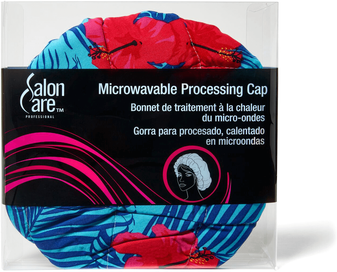
Salon Care Microwavable Heat Processing CapSalon Care Microwavable Heat Processing Cap just needs to be heated in the microwave, no cord, no fuss! The filling is 100% flaxseed and will hold heat for up to 30 minutes. The cap is reusable time and time again. Use with any hair treatment that...21,99 $*Shipping: 0,00 $Secure redirect to the provider
-
Superfresco Easy Industry Black WallpaperThe combination of deep charcoal and steel grey colors create a depth and atmosphere to this paper which will reflect in your home. Style with matt concrete textures and glossy metallic finishes to complete your scheme.80,00 $*Shipping: 0,00 $Secure redirect to the provider
-
Officially Licensed Gas Safe Gas Safe® Landlord Safety Record for Leisure Industry – Pad of 25Gas Safe® Landlord Safety Record for Leisure Industry – Pack of 25 (GSRLILPAD14) The Gas Safe® Landlords Gas Safety Record Pad for the leisure industry is designed for gas safety inspections on boats and Leisure Accommodation Vehicles (LAVs). It contains 25 sets of carbonless 3-part forms, giving gas engineers, landlords and service companies working in the mobile leisure industry a straightforward way to keep compliant records. Reinforced double covers, a writing guard and triple stitched binding make the pad tough enough for outdoor and mobile use, and the A4 landscape layout is easy to complete in tight or awkward spaces typical of boats and LAVs. Each form is individually numbered and perforated for clean removal and a professional finish. Key Features & Benefits Leisure Se13,50 £*Shipping: 5,00 £Secure redirect to the provider
-
AMiO 04504 Inspection LampBattery: Li-Ion Rechargeable Battery; Features: with rechargeable battery, with charger, magnetic, with hook; Lamp Type: LED; Rechargeable Battery Voltage [V]: 3.7; Light Duration [h]: 2-12; Charging time [h]: 3.5-4; Luminous Flux [lm]: 600, 300, 100; Operating Mode: Battery; Battery Capacity [mAh]: 2600; Mounting Type: Magnet Mount; Cable Length [m]: 0.6; Shock Resistance (IK code): IK07 (up to 2.0J); Connectors/Plugs: USB type-C; Rotation angle [°]: 360; Material: ABS (Acrylonitrile-Butadiene-Styrene Copolymerisate); Protection Type (IP Code): IP2022,49 £*Shipping: 8,45 £Secure redirect to the provider
-
Why do liquids have different densities at the same temperature?
Liquids have different densities at the same temperature because of variations in their molecular composition and arrangement. The density of a liquid is determined by the mass of its molecules and how closely packed they are. Different liquids have different molecular weights and sizes, leading to variations in density. Additionally, factors such as intermolecular forces and polarity can also influence the density of a liquid. **
-
How do you calculate the center of mass with different densities?
To calculate the center of mass with different densities, you would first need to determine the mass of each individual component. Then, you would multiply the mass of each component by its respective position vector, and sum these products for all components. Finally, you would divide the total sum by the total mass of the system to find the coordinates of the center of mass. This calculation takes into account the different densities of the components, as the mass and position of each component are considered in the overall calculation. **
-
Can different types of milk be distinguished based on their different densities?
Yes, different types of milk can be distinguished based on their different densities. Whole milk, which contains a higher fat content, is denser than skim milk, which has had most of the fat removed. By measuring the density of a sample of milk, one can determine the type of milk based on its fat content. This can be done using a hydrometer or a simple float test. **
-
What is the explanation for the different densities of diamond and graphite?
The different densities of diamond and graphite can be explained by their different atomic structures. Diamond has a tightly packed, three-dimensional crystal lattice structure, with each carbon atom bonded to four other carbon atoms in a tetrahedral arrangement. This structure results in a high density for diamond. On the other hand, graphite has a layered structure with carbon atoms arranged in flat, hexagonal sheets that are only weakly bonded to each other. This arrangement allows for more space between the layers, resulting in a lower density for graphite compared to diamond. **
Similar search terms for Densities
-
AMiO 04505 Inspection LampBattery: Li-Ion Rechargeable Battery; Light Duration [h]: 2-2.5 hours (1000 lm), 4 hours (500 lm); Features: with rechargeable battery, with charger, magnetic; Charging time [h]: 3.5-4, 2; Lamp Type: LED; Rechargeable Battery Voltage [V]: 3.7; Luminous Flux [lm]: 500, 1000; Operating Mode: Battery; Battery Capacity [mAh]: 4400; Mounting Type: Magnet Mount; Cable Length [m]: 0.6; Shock Resistance (IK code): IK07 (up to 2.0J); Supplementary Info: Motion sensor; Connectors/Plugs: USB type-C; Overcharging protection: Yes; Rotation angle [°]: 18035,99 £*Shipping: 8,45 £Secure redirect to the provider
-
ENERGY NE00356 Inspection LampLamp Type: LED; Candlepower [cd]: 13; Voltage [V]: 7.2; Battery Capacity [mAh]: 700; Moisture protection: with splash-water protection; Rechargeable Battery Type: Li-Ion Rechargeable Battery; Number of LEDs: 60+1; Light Duration [h]: 4; Mains voltage (AC) [V]: 230; DC Voltage [V]: 12; Fastening Type: Hook fixing; Supplementary Article / Supplementary Info Info 2: Magnetic14,49 £*Shipping: 8,45 £Secure redirect to the provider
-
SCANGRIP 03.5690 Inspection LampBattery: Li-Ion Battery; Battery Capacity [mAh]: 2600; Voltage [V]: 3.7; Luminous Flux [lm]: 60 - 600; Charging time [h]: 4; Light Duration [h]: 15; Protection Type (IP Code): IP54; Supplementary Article / Supplementary Info Info 2: Magnetic, with hook; Supplementary Article / Supplementary Info: with charger; Weight [g]: 326; Colour Temperature [K]: 600055,49 £*Shipping: 8,45 £Secure redirect to the provider
-
Can different types of milk be distinguished based on their varying densities?
Yes, different types of milk can be distinguished based on their varying densities. The density of milk can be influenced by factors such as fat content and protein content. For example, whole milk is denser than skim milk due to its higher fat content. By measuring the density of milk samples, it is possible to differentiate between different types of milk. **
-
Can one distinguish between different types of milk based on their different densities?
Yes, one can distinguish between different types of milk based on their different densities. Whole milk typically has a higher density compared to skim milk or low-fat milk due to its higher fat content. By measuring the density of milk using a hydrometer or a similar device, one can differentiate between different types of milk based on their fat content. This method can be useful for quality control purposes in the dairy industry or for individuals who are looking to monitor their fat intake. **
-
What is the mathematical approach to solving the iceberg problem with two different densities?
To solve the iceberg problem with two different densities mathematically, we can use the principle of buoyancy. We can calculate the buoyant force acting on each iceberg by multiplying the density of water, the acceleration due to gravity, and the volume of the submerged portion of the iceberg. By comparing the buoyant forces acting on the two icebergs, we can determine which iceberg will float higher or lower in the water. This approach allows us to quantitatively analyze the behavior of the icebergs based on their densities. **
-
What is a fire safety inspection?
A fire safety inspection is a thorough examination of a building or property to ensure that it meets all necessary fire safety regulations and standards. During the inspection, trained professionals assess various aspects of the property, such as fire alarms, sprinkler systems, emergency exits, and overall fire hazards. The goal of a fire safety inspection is to identify and address any potential fire risks and ensure that the property is equipped to prevent and respond to fires effectively. This helps to protect the occupants of the building and minimize the potential for fire-related damage. **
* All prices are inclusive of VAT and, if applicable, plus shipping costs. The offer information is based on the details provided by the respective shop and is updated through automated processes. Real-time updates do not occur, so deviations can occur in individual cases. ** Note: Parts of this content were created by AI.