Buy bmpa.eu ?
We are moving the project
bmpa.eu .
Are you interested in purchasing the domain
bmpa.eu ?
domain@kv-gmbh.de · 0541-91531010
Buy bmpa.eu ?
Are dogs scavengers?
Yes, dogs are scavengers by nature. They have evolved to scavenge for food in the wild, which is why they may exhibit behaviors such as digging through trash or begging for scraps. However, domesticated dogs are typically fed by their owners and may not need to scavenge for food as much as their wild counterparts. Nonetheless, the scavenging instinct remains a part of their natural behavior. **
Are humans technically considered scavengers?
Humans are not technically considered scavengers. While humans may scavenge for food in certain situations, our primary mode of obtaining food is through hunting, gathering, and agriculture. Scavengers typically rely on feeding off of the remains of dead animals or plants, which is not the main source of sustenance for humans. **


Similar search terms for Scavengers
Top-Angebote
Products related to Scavengers:
-
Superfresco Easy Industry Black WallpaperThe combination of deep charcoal and steel grey colors create a depth and atmosphere to this paper which will reflect in your home. Style with matt concrete textures and glossy metallic finishes to complete your scheme.80,00 $*Shipping: 0,00 $Secure redirect to the provider
-
Multicon Wholesale Hub Telescoping Inspection Mirror Set Adjustable Flexible Inspection Mirror For Hard to Reach Spaces Telescoping Inspection Mirror Set Adjustable Flexible Inspection Mirror For Hard to Reach SpacesLooking for a versatile tool to help you inspect tight spaces The 2 Pack Telescoping Inspection Mirror Set is designed for those hardtoreach areas, making inspections easier than ever. Whether you're a mechanic, DIY enthusiast, or just need to check...69,97 $*Shipping: 0,00 $Secure redirect to the provider
-
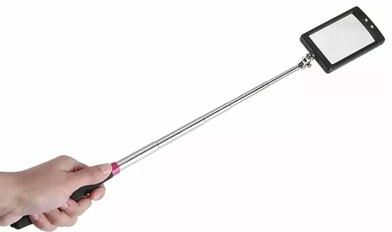
Market Central Telescoping LED Inspection Mirror For Mechanics Telescoping LED Inspection Mirror For MechanicsExperience the confidence of seeing what others can't. This LED inspection mirror helps you inspect tight, dark, and hardtoreach spaces without taking parts apart, making every repair faster and easier. Designed for mechanics, DIY enthusiasts, and...34,97 $*Shipping: 0,00 $Secure redirect to the provider



-
Is homology or analogy present in all vultures as scavengers?
Homology is present in all vultures as scavengers. This is because all vultures share a common evolutionary ancestor and have similar anatomical features and behaviors that have been adapted for scavenging. These shared characteristics are considered homologous traits. Analogous traits, on the other hand, would be features that have evolved independently in different species to serve a similar function, which is not the case for vultures as scavengers. **
-
Do scavengers have the same teeth and digestive system as omnivores?
Scavengers typically have teeth and digestive systems that are adapted to consume a wide variety of foods, similar to omnivores. However, the specific adaptations can vary depending on the species and their diet. For example, some scavengers may have sharp teeth for tearing into carrion, while others may have grinding teeth for consuming plant matter found in their scavenged meals. Overall, scavengers and omnivores share similarities in their dental and digestive adaptations to help them efficiently process a range of food sources. **
-
Do scavengers like hyenas and vultures have toxic bacteria in their saliva similar to Komodo dragons?
No, scavengers like hyenas and vultures do not have toxic bacteria in their saliva like Komodo dragons. Komodo dragons have a unique oral bacteria that can cause a deadly infection in their prey, while hyenas and vultures do not possess this type of bacteria. Instead, these scavengers have strong stomach acids that help them digest and eliminate any harmful bacteria they may come into contact with while feeding on carrion. **
-
Do scavengers like hyenas and vultures have similar to Komodo dragons poisonous bacteria in their saliva?
No, scavengers like hyenas and vultures do not have similar poisonous bacteria in their saliva like Komodo dragons. Komodo dragons have a unique type of bacteria in their saliva that can cause deadly infections in their prey. Hyenas and vultures rely on their strong stomach acids to digest their food, rather than relying on bacteria in their saliva to weaken their prey. **


Do scavengers like hyenas and vultures have poisonous bacteria in their saliva similar to Komodo dragons?
No, scavengers like hyenas and vultures do not have poisonous bacteria in their saliva like Komodo dragons. Komodo dragons have a unique oral bacteria that can cause deadly infections in their prey, while hyenas and vultures rely on their strong stomach acids to break down and digest their food, which helps prevent the growth of harmful bacteria in their saliva. Scavengers play an important role in the ecosystem by helping to clean up carcasses and prevent the spread of disease. **
What is a fire safety inspection?
A fire safety inspection is a thorough examination of a building or property to ensure that it meets all necessary fire safety regulations and standards. During the inspection, trained professionals assess various aspects of the property, such as fire alarms, sprinkler systems, emergency exits, and overall fire hazards. The goal of a fire safety inspection is to identify and address any potential fire risks and ensure that the property is equipped to prevent and respond to fires effectively. This helps to protect the occupants of the building and minimize the potential for fire-related damage. **
Top-Angebote
Products related to Scavengers:
-
Salon Care Microwavable Heat Processing CapSalon Care Microwavable Heat Processing Cap just needs to be heated in the microwave, no cord, no fuss! The filling is 100% flaxseed and will hold heat for up to 30 minutes. The cap is reusable time and time again. Use with any hair treatment that...21,99 $*Shipping: 0,00 $Secure redirect to the provider
-
Officially Licensed Gas Safe Gas Safe® Landlord Safety Record for Leisure Industry – Pad of 25Gas Safe® Landlord Safety Record for Leisure Industry – Pack of 25 (GSRLILPAD14) The Gas Safe® Landlords Gas Safety Record Pad for the leisure industry is designed for gas safety inspections on boats and Leisure Accommodation Vehicles (LAVs). It contains 25 sets of carbonless 3-part forms, giving gas engineers, landlords and service companies working in the mobile leisure industry a straightforward way to keep compliant records. Reinforced double covers, a writing guard and triple stitched binding make the pad tough enough for outdoor and mobile use, and the A4 landscape layout is easy to complete in tight or awkward spaces typical of boats and LAVs. Each form is individually numbered and perforated for clean removal and a professional finish. Key Features & Benefits Leisure Se13,50 £*Shipping: 5,00 £Secure redirect to the provider
-
Superfresco Easy Industry Black WallpaperThe combination of deep charcoal and steel grey colors create a depth and atmosphere to this paper which will reflect in your home. Style with matt concrete textures and glossy metallic finishes to complete your scheme.80,00 $*Shipping: 0,00 $Secure redirect to the provider
-
Multicon Wholesale Hub Telescoping Inspection Mirror Set Adjustable Flexible Inspection Mirror For Hard to Reach Spaces Telescoping Inspection Mirror Set Adjustable Flexible Inspection Mirror For Hard to Reach SpacesLooking for a versatile tool to help you inspect tight spaces The 2 Pack Telescoping Inspection Mirror Set is designed for those hardtoreach areas, making inspections easier than ever. Whether you're a mechanic, DIY enthusiast, or just need to check...69,97 $*Shipping: 0,00 $Secure redirect to the provider
-
Are dogs scavengers?
Yes, dogs are scavengers by nature. They have evolved to scavenge for food in the wild, which is why they may exhibit behaviors such as digging through trash or begging for scraps. However, domesticated dogs are typically fed by their owners and may not need to scavenge for food as much as their wild counterparts. Nonetheless, the scavenging instinct remains a part of their natural behavior. **
-
Are humans technically considered scavengers?
Humans are not technically considered scavengers. While humans may scavenge for food in certain situations, our primary mode of obtaining food is through hunting, gathering, and agriculture. Scavengers typically rely on feeding off of the remains of dead animals or plants, which is not the main source of sustenance for humans. **
-
Is homology or analogy present in all vultures as scavengers?
Homology is present in all vultures as scavengers. This is because all vultures share a common evolutionary ancestor and have similar anatomical features and behaviors that have been adapted for scavenging. These shared characteristics are considered homologous traits. Analogous traits, on the other hand, would be features that have evolved independently in different species to serve a similar function, which is not the case for vultures as scavengers. **
-
Do scavengers have the same teeth and digestive system as omnivores?
Scavengers typically have teeth and digestive systems that are adapted to consume a wide variety of foods, similar to omnivores. However, the specific adaptations can vary depending on the species and their diet. For example, some scavengers may have sharp teeth for tearing into carrion, while others may have grinding teeth for consuming plant matter found in their scavenged meals. Overall, scavengers and omnivores share similarities in their dental and digestive adaptations to help them efficiently process a range of food sources. **
Similar search terms for Scavengers
-
Market Central Telescoping LED Inspection Mirror For Mechanics Telescoping LED Inspection Mirror For MechanicsExperience the confidence of seeing what others can't. This LED inspection mirror helps you inspect tight, dark, and hardtoreach spaces without taking parts apart, making every repair faster and easier. Designed for mechanics, DIY enthusiasts, and...34,97 $*Shipping: 0,00 $Secure redirect to the provider
-
Uplifted Finds Diagnostic 365nm UV Clinical Inspection Hub Diagnostic 365nm UV Clinical Inspection HubEnsure the dermatological integrity of your pet with the Clinical Inspection Hub, a professionalgrade diagnostic module engineered with 365nm UVspectrum logic. This highperformance device features a specialized Black Mirror filter technology...90,97 $*Shipping: 0,00 $Secure redirect to the provider
-
Do scavengers like hyenas and vultures have toxic bacteria in their saliva similar to Komodo dragons?
No, scavengers like hyenas and vultures do not have toxic bacteria in their saliva like Komodo dragons. Komodo dragons have a unique oral bacteria that can cause a deadly infection in their prey, while hyenas and vultures do not possess this type of bacteria. Instead, these scavengers have strong stomach acids that help them digest and eliminate any harmful bacteria they may come into contact with while feeding on carrion. **
-
Do scavengers like hyenas and vultures have similar to Komodo dragons poisonous bacteria in their saliva?
No, scavengers like hyenas and vultures do not have similar poisonous bacteria in their saliva like Komodo dragons. Komodo dragons have a unique type of bacteria in their saliva that can cause deadly infections in their prey. Hyenas and vultures rely on their strong stomach acids to digest their food, rather than relying on bacteria in their saliva to weaken their prey. **
-
Do scavengers like hyenas and vultures have poisonous bacteria in their saliva similar to Komodo dragons?
No, scavengers like hyenas and vultures do not have poisonous bacteria in their saliva like Komodo dragons. Komodo dragons have a unique oral bacteria that can cause deadly infections in their prey, while hyenas and vultures rely on their strong stomach acids to break down and digest their food, which helps prevent the growth of harmful bacteria in their saliva. Scavengers play an important role in the ecosystem by helping to clean up carcasses and prevent the spread of disease. **
-
What is a fire safety inspection?
A fire safety inspection is a thorough examination of a building or property to ensure that it meets all necessary fire safety regulations and standards. During the inspection, trained professionals assess various aspects of the property, such as fire alarms, sprinkler systems, emergency exits, and overall fire hazards. The goal of a fire safety inspection is to identify and address any potential fire risks and ensure that the property is equipped to prevent and respond to fires effectively. This helps to protect the occupants of the building and minimize the potential for fire-related damage. **
* All prices are inclusive of VAT and, if applicable, plus shipping costs. The offer information is based on the details provided by the respective shop and is updated through automated processes. Real-time updates do not occur, so deviations can occur in individual cases. ** Note: Parts of this content were created by AI.