Buy bmpa.eu ?
We are moving the project
bmpa.eu .
Are you interested in purchasing the domain
bmpa.eu ?
domain@kv-gmbh.de · 0541-91531010
Buy bmpa.eu ?
How did timekeeping work in ancient times?
In ancient times, timekeeping was primarily based on the observation of celestial bodies such as the sun, moon, and stars. The movement of these celestial bodies helped people track the passage of time, with the sun's position in the sky indicating the time of day. Water clocks and sundials were also used to measure time more precisely. The concept of dividing the day into hours, minutes, and seconds was developed by the ancient Egyptians and Greeks, laying the foundation for modern timekeeping systems. **
How does timekeeping work in Star Wars?
In the Star Wars universe, timekeeping is based on the Galactic Standard Calendar, which is divided into 12 months with each month consisting of 30 days. The calendar is based on the orbit of the planet Coruscant, the capital of the Galactic Republic. Each day is divided into 24 standard hours, with each hour consisting of 60 minutes and each minute consisting of 60 seconds. Timekeeping in Star Wars is essential for coordinating events across different planets and systems in the galaxy. **


Similar search terms for Timekeeping
Top-Angebote
Products related to Timekeeping:
-
Superfresco Easy Industry Black WallpaperThe combination of deep charcoal and steel grey colors create a depth and atmosphere to this paper which will reflect in your home. Style with matt concrete textures and glossy metallic finishes to complete your scheme.80,00 $*Shipping: 0,00 $Secure redirect to the provider
-
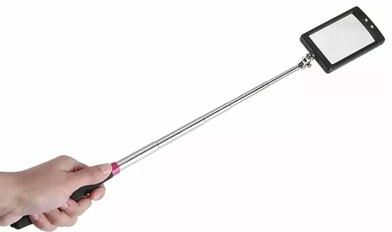
Multicon Wholesale Hub Telescoping Inspection Mirror Set Adjustable Flexible Inspection Mirror For Hard to Reach Spaces Telescoping Inspection Mirror Set Adjustable Flexible Inspection Mirror For Hard to Reach SpacesLooking for a versatile tool to help you inspect tight spaces The 2 Pack Telescoping Inspection Mirror Set is designed for those hardtoreach areas, making inspections easier than ever. Whether you're a mechanic, DIY enthusiast, or just need to check...69,97 $*Shipping: 0,00 $Secure redirect to the provider
-
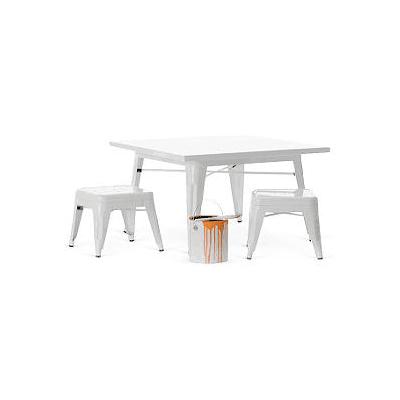
Little Nest Industry Table & Stool Set in WhiteThis industrial chic table and chair set is fantastic for kids to use inside or out. We love the retro inspired aesthetic and fresh modern colors. This set includes 1 table and 2 stools.Dimensions: Table 31.5 x 31.5 x 19.68 (in.); Stools: 15.35 x...599,00 $*Shipping: 0,00 $Secure redirect to the provider

-
How can one program timekeeping in C?
To program timekeeping in C, one can use the time.h header file which provides functions to work with date and time. The time() function can be used to get the current time in seconds since the Epoch. This value can be converted to a more readable format using functions like localtime() or gmtime(). Additionally, functions like strftime() can be used to format the time in a specific way. By utilizing these functions, one can effectively program timekeeping in C. **
-
How does the timekeeping work in Star Wars?
In the Star Wars universe, timekeeping is based on the Galactic Standard Calendar, which is divided into 12 months with each month consisting of 30 days. The calendar is based on the Coruscant solar cycle, with each day lasting 24 standard hours. Time is also measured in terms of rotations of the planet Coruscant, with 24 hours in a day and 60 minutes in an hour. The timekeeping system in Star Wars is consistent across the galaxy and is used by various species and cultures. **
-
What were the timekeeping methods in the Middle Ages?
In the Middle Ages, timekeeping methods were primarily based on the position of the sun in the sky. Sundials were commonly used to track time during the day, with the shadow cast by the sun indicating the time. Water clocks, known as clepsydrae, were also used to measure time by the flow of water from one container to another. Candle clocks were another method, where time was measured by the amount of wax that had burned. These methods were imprecise compared to modern timekeeping but were sufficient for daily activities in the Middle Ages. **
-
How does timekeeping work in the Bleach Soul Society?
In the Bleach Soul Society, timekeeping is based on a 24-hour cycle similar to Earth. However, the Soul Society also has its own unique method of timekeeping known as the Gotei 13 Timekeeping. This system divides the day into six "gates," with each gate lasting four hours. The gates are named after the divisions of the Gotei 13, the military force of the Soul Society. This system is used to coordinate the activities of the Gotei 13 and other Soul Society organizations. Overall, timekeeping in the Bleach Soul Society is a combination of traditional Earth timekeeping and its own distinct system. **


How does the timekeeping work in the Bleach Soul Society?
In the Bleach Soul Society, timekeeping is based on a system of day and night cycles similar to Earth. The Soul Society has its own sun and moon that rise and set, marking the passage of time. The Soul Reapers use these celestial bodies to keep track of time and schedule their duties and activities. Additionally, the Seireitei, the central city of the Soul Society, has a large clock tower that helps in timekeeping for the residents. Overall, timekeeping in the Bleach Soul Society is a combination of natural celestial cues and man-made structures to maintain order and organization. **
What is the difference between timekeeping and different month lengths?
Timekeeping refers to the measurement and recording of time, typically using units such as seconds, minutes, and hours. Different month lengths, on the other hand, refer to the varying number of days in each month of the year. While timekeeping is a universal system used to track the passage of time, different month lengths are a result of the Earth's orbit around the sun and the lunar cycle. This leads to months ranging from 28 to 31 days, with February being the shortest month and varying lengths of 30 or 31 days for the other months. **
Top-Angebote
Products related to Timekeeping:
-
Salon Care Microwavable Heat Processing CapSalon Care Microwavable Heat Processing Cap just needs to be heated in the microwave, no cord, no fuss! The filling is 100% flaxseed and will hold heat for up to 30 minutes. The cap is reusable time and time again. Use with any hair treatment that...21,99 $*Shipping: 0,00 $Secure redirect to the provider
-
Officially Licensed Gas Safe Gas Safe® Landlord Safety Record for Leisure Industry – Pad of 25Gas Safe® Landlord Safety Record for Leisure Industry – Pack of 25 (GSRLILPAD14) The Gas Safe® Landlords Gas Safety Record Pad for the leisure industry is designed for gas safety inspections on boats and Leisure Accommodation Vehicles (LAVs). It contains 25 sets of carbonless 3-part forms, giving gas engineers, landlords and service companies working in the mobile leisure industry a straightforward way to keep compliant records. Reinforced double covers, a writing guard and triple stitched binding make the pad tough enough for outdoor and mobile use, and the A4 landscape layout is easy to complete in tight or awkward spaces typical of boats and LAVs. Each form is individually numbered and perforated for clean removal and a professional finish. Key Features & Benefits Leisure Se13,50 £*Shipping: 5,00 £Secure redirect to the provider
-
Superfresco Easy Industry Black WallpaperThe combination of deep charcoal and steel grey colors create a depth and atmosphere to this paper which will reflect in your home. Style with matt concrete textures and glossy metallic finishes to complete your scheme.80,00 $*Shipping: 0,00 $Secure redirect to the provider
-
Multicon Wholesale Hub Telescoping Inspection Mirror Set Adjustable Flexible Inspection Mirror For Hard to Reach Spaces Telescoping Inspection Mirror Set Adjustable Flexible Inspection Mirror For Hard to Reach SpacesLooking for a versatile tool to help you inspect tight spaces The 2 Pack Telescoping Inspection Mirror Set is designed for those hardtoreach areas, making inspections easier than ever. Whether you're a mechanic, DIY enthusiast, or just need to check...69,97 $*Shipping: 0,00 $Secure redirect to the provider
-
How did timekeeping work in ancient times?
In ancient times, timekeeping was primarily based on the observation of celestial bodies such as the sun, moon, and stars. The movement of these celestial bodies helped people track the passage of time, with the sun's position in the sky indicating the time of day. Water clocks and sundials were also used to measure time more precisely. The concept of dividing the day into hours, minutes, and seconds was developed by the ancient Egyptians and Greeks, laying the foundation for modern timekeeping systems. **
-
How does timekeeping work in Star Wars?
In the Star Wars universe, timekeeping is based on the Galactic Standard Calendar, which is divided into 12 months with each month consisting of 30 days. The calendar is based on the orbit of the planet Coruscant, the capital of the Galactic Republic. Each day is divided into 24 standard hours, with each hour consisting of 60 minutes and each minute consisting of 60 seconds. Timekeeping in Star Wars is essential for coordinating events across different planets and systems in the galaxy. **
-
How can one program timekeeping in C?
To program timekeeping in C, one can use the time.h header file which provides functions to work with date and time. The time() function can be used to get the current time in seconds since the Epoch. This value can be converted to a more readable format using functions like localtime() or gmtime(). Additionally, functions like strftime() can be used to format the time in a specific way. By utilizing these functions, one can effectively program timekeeping in C. **
-
How does the timekeeping work in Star Wars?
In the Star Wars universe, timekeeping is based on the Galactic Standard Calendar, which is divided into 12 months with each month consisting of 30 days. The calendar is based on the Coruscant solar cycle, with each day lasting 24 standard hours. Time is also measured in terms of rotations of the planet Coruscant, with 24 hours in a day and 60 minutes in an hour. The timekeeping system in Star Wars is consistent across the galaxy and is used by various species and cultures. **
Similar search terms for Timekeeping
-
Little Nest Industry Table & Stool Set in WhiteThis industrial chic table and chair set is fantastic for kids to use inside or out. We love the retro inspired aesthetic and fresh modern colors. This set includes 1 table and 2 stools.Dimensions: Table 31.5 x 31.5 x 19.68 (in.); Stools: 15.35 x...599,00 $*Shipping: 0,00 $Secure redirect to the provider
-
Uplifted Finds Diagnostic 365nm UV Clinical Inspection Hub Diagnostic 365nm UV Clinical Inspection HubEnsure the dermatological integrity of your pet with the Clinical Inspection Hub, a professionalgrade diagnostic module engineered with 365nm UVspectrum logic. This highperformance device features a specialized Black Mirror filter technology...90,97 $*Shipping: 0,00 $Secure redirect to the provider
-
Market Central Telescoping LED Inspection Mirror For Mechanics Telescoping LED Inspection Mirror For MechanicsExperience the confidence of seeing what others can't. This LED inspection mirror helps you inspect tight, dark, and hardtoreach spaces without taking parts apart, making every repair faster and easier. Designed for mechanics, DIY enthusiasts, and...34,97 $*Shipping: 0,00 $Secure redirect to the provider
-
What were the timekeeping methods in the Middle Ages?
In the Middle Ages, timekeeping methods were primarily based on the position of the sun in the sky. Sundials were commonly used to track time during the day, with the shadow cast by the sun indicating the time. Water clocks, known as clepsydrae, were also used to measure time by the flow of water from one container to another. Candle clocks were another method, where time was measured by the amount of wax that had burned. These methods were imprecise compared to modern timekeeping but were sufficient for daily activities in the Middle Ages. **
-
How does timekeeping work in the Bleach Soul Society?
In the Bleach Soul Society, timekeeping is based on a 24-hour cycle similar to Earth. However, the Soul Society also has its own unique method of timekeeping known as the Gotei 13 Timekeeping. This system divides the day into six "gates," with each gate lasting four hours. The gates are named after the divisions of the Gotei 13, the military force of the Soul Society. This system is used to coordinate the activities of the Gotei 13 and other Soul Society organizations. Overall, timekeeping in the Bleach Soul Society is a combination of traditional Earth timekeeping and its own distinct system. **
-
How does the timekeeping work in the Bleach Soul Society?
In the Bleach Soul Society, timekeeping is based on a system of day and night cycles similar to Earth. The Soul Society has its own sun and moon that rise and set, marking the passage of time. The Soul Reapers use these celestial bodies to keep track of time and schedule their duties and activities. Additionally, the Seireitei, the central city of the Soul Society, has a large clock tower that helps in timekeeping for the residents. Overall, timekeeping in the Bleach Soul Society is a combination of natural celestial cues and man-made structures to maintain order and organization. **
-
What is the difference between timekeeping and different month lengths?
Timekeeping refers to the measurement and recording of time, typically using units such as seconds, minutes, and hours. Different month lengths, on the other hand, refer to the varying number of days in each month of the year. While timekeeping is a universal system used to track the passage of time, different month lengths are a result of the Earth's orbit around the sun and the lunar cycle. This leads to months ranging from 28 to 31 days, with February being the shortest month and varying lengths of 30 or 31 days for the other months. **
* All prices are inclusive of VAT and, if applicable, plus shipping costs. The offer information is based on the details provided by the respective shop and is updated through automated processes. Real-time updates do not occur, so deviations can occur in individual cases. ** Note: Parts of this content were created by AI.